

A household bill tracker that handles instalment plans
List every recurring cost with its due date and how it's paid, then separate the total you've committed to from the payment that's actually due next. Those two numbers are not the same.
Running a home means a dozen or more recurring commitments: energy, water, council tax, broadband, insurance, subscriptions, vehicle costs. Most arrive by direct debit, which is convenient and also the reason nobody can say what the house costs to run.
A bill tracker's job is to answer three questions — what's due next, what's overdue, and what this all adds up to over a year — without requiring you to reconcile a spreadsheet every month.
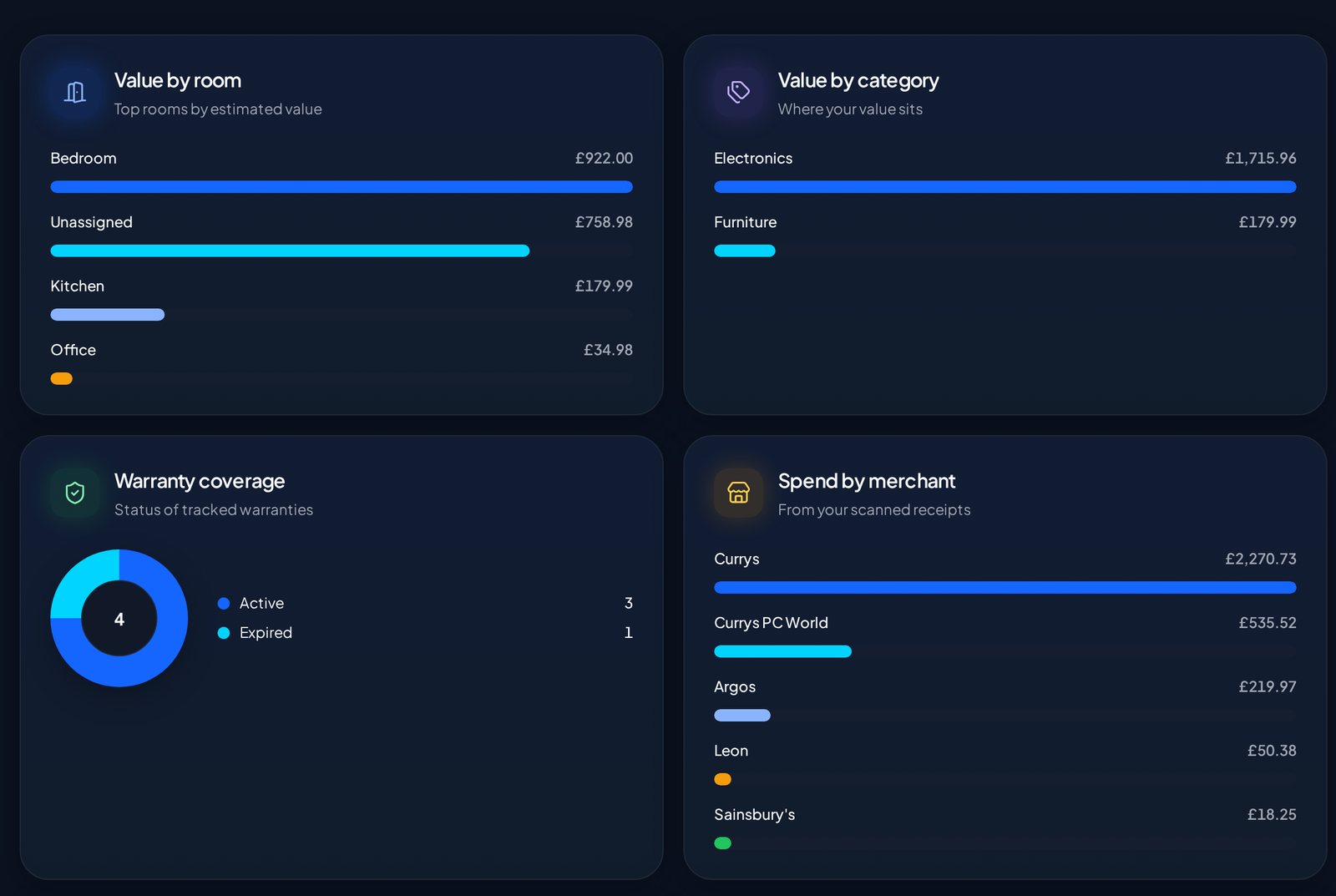
See what your home actually costs to run
Add your recurring bills to Vekrin, including the ones paid in instalments, and get the next payment and the yearly total in one view.
What belongs in a household bill tracker
Group by what the money does, not by who invoiced you.
- Energy and water — Gas, electricity, water — often variable, often on a monthly direct debit.
- Property — Council tax, rent or mortgage, ground rent, service charge.
- Connectivity — Broadband, mobile contracts, television and streaming.
- Insurance — Home, contents, car, travel, pet — usually annual, frequently paid in twelve instalments.
- Vehicles — Road tax, finance, servicing, breakdown cover.
- Everything else recurring — Subscriptions, memberships, school costs, childcare.
Instalment plans are where trackers usually go wrong
A car tax direct debit or an annual insurance premium spread across eleven or twelve payments is one commitment with a schedule, not twelve separate bills. Recording it as a single annual figure hides the monthly cash flow; recording it as twelve unrelated bills hides the total.
The useful model keeps both: the total you've committed to, and the next payment with its own date and status. Then 'what's due this month' and 'what does this cost a year' are both answerable, and marking a payment as made doesn't quietly move the whole bill.
It matters for accuracy too. A payment history should only count payments that actually happened — a future scheduled instalment isn't spending, and mixing the two produces charts that flatter or alarm you for no reason.
Setting up in half an hour
- Open your bank's list of direct debits and standing orders
It's the fastest inventory of your recurring costs, and it usually contains at least one surprise. - Add each one with its amount, frequency and next due date
For variable bills, use a recent typical amount and adjust later. - Record instalment plans as a schedule
Total commitment, number of payments, dates. Not twelve unrelated entries. - Note renewal dates for anything annual
Insurance and broadband are where auto-renewal quietly costs the most. - Check the total against your account
The point of the exercise is a figure you trust, not a tidy list.
The renewal you didn't notice
A home insurance policy auto-renews 18% higher than last year, paid monthly, so nothing about it feels like an event. Broadband came off its introductory rate four months ago.
Neither shows up in a bank balance you glance at. Both show up immediately in a tracker that records renewal dates and what each commitment costs over a year.
Bills in Vekrin
Vekrin groups bills into household categories and shows what's due next, what's overdue and what the month adds up to. Instalment plans are held as a schedule against a single bill, so the next payment and the total commitment are both visible.
Marking a payment as paid asks for confirmation and can be undone, and only confirmed payments count towards history. Bills sit alongside your belongings, receipts and documents rather than in a separate app, and the dashboard raises what needs attention.
- Next payment and total commitment shown separately
- Overdue and due-soon alerts that open the exact payments behind them
- Confirmed payment history kept apart from the future schedule
Common questions
- What's the best way to keep track of household bills?
- Start from your bank's direct debit list, record each commitment with its amount, frequency and next due date, and keep annual renewal dates visible. Anything paid in instalments should be recorded as one bill with a payment schedule.
- How do I track a bill paid in monthly instalments?
- Record the total you've agreed to and the schedule of payments beneath it. That way the next payment has its own date and status while the annual figure stays accurate.
- Should bills live in the same place as receipts and belongings?
- It helps. A boiler has a service history, a warranty and an energy bill attached to it; keeping household records together means you're answering questions about your home rather than about three different apps.
- How can I tell if a bill has gone up?
- Track the amount over time rather than only the next due date. Variable energy costs and quiet annual renewals are the two places household spending drifts without anybody deciding anything.
Related reading
See what your home actually costs to run
Add your recurring bills to Vekrin, including the ones paid in instalments, and get the next payment and the yearly total in one view.