

How to organise home documents
Sort your paperwork once by the thing it belongs to, keep a scanned copy of anything you would struggle to replace, and make retrieval the test of whether your system works.
Most households don't have a filing problem. They have a retrieval problem. The boiler service certificate exists somewhere; the question is whether you can put your hands on it during the ten minutes an engineer is standing in your kitchen.
The method below takes an afternoon to set up and very little effort to maintain. It works with a filing cabinet, and it works better with a digital copy, because a scan can be searched, shared and kept off-site.
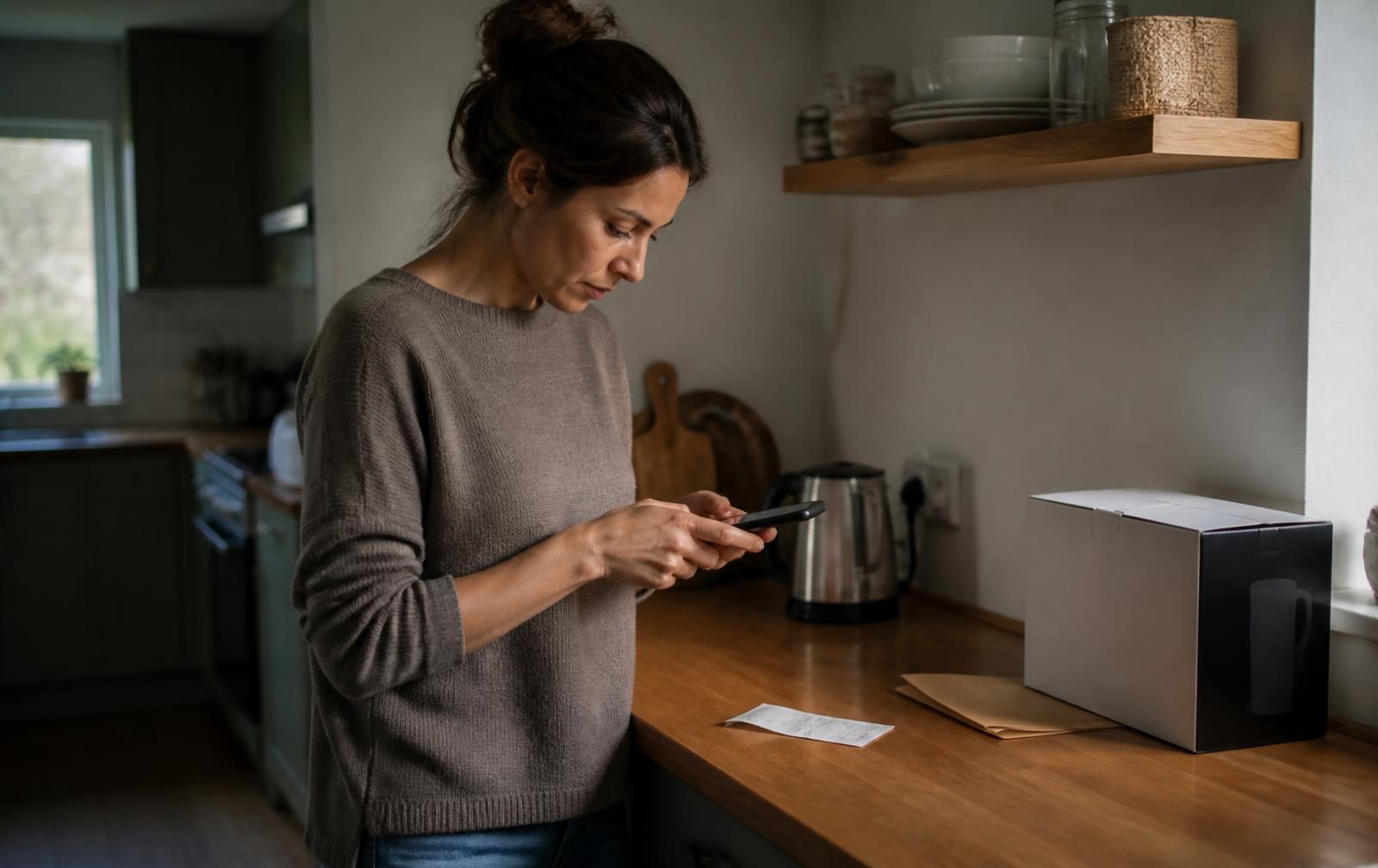
Put your household paperwork somewhere it can be found
Create a home in Vekrin, add the records you'd hate to lose, and keep them attached to what they actually relate to.
Why alphabetical folders usually fail
Filing by document type feels tidy. In practice it splits everything you need at once. When the washing machine breaks you want the receipt, the warranty terms and the model number together, but a type-based system has scattered them across three folders and two years.
Organising around the thing instead — the appliance, the vehicle, the property, the policy — keeps related paper together. It also gives you an obvious answer to the question that stalls most people mid-sort: where does this piece of paper go?
Six groups that cover almost everything
You don't need twenty categories. Households tend to produce paperwork in a handful of predictable shapes.
- Property and tenancy — Deeds or tenancy agreement, mortgage statements, survey, planning or building control paperwork, boiler and electrical safety certificates.
- Belongings — Receipts, warranty terms, manuals, serial and model numbers, and photographs of anything valuable.
- Money and bills — Energy, water, council tax, broadband, insurance premiums, and any payment plan you've agreed to in instalments.
- Insurance — Policy schedules, cover summaries, correspondence, and the evidence you'd need to support a claim.
- Vehicles — V5C, MOT certificates, service history, road tax and finance agreements.
- People — Passports, birth and marriage certificates, NHS and school correspondence, wills and powers of attorney.
Anything that doesn't fit one of those is usually either an item record in disguise or something you can safely recycle.
What to keep, and for how long
Retention rules vary, and anything tax-related deserves a check against current HMRC guidance rather than a rule of thumb. As a starting point:
- Keep permanently — Certificates you cannot easily replace, property deeds, wills, and anything recording legal ownership.
- Keep for the life of the item — Receipts, warranty documents and service records. They stop being useful the day you sell or dispose of the thing.
- Keep for a few years — Utility bills, bank statements and tax records — useful for proof of address, disputes and self-assessment.
- Recycle now — Superseded policy schedules, expired guarantees, duplicate statements and marketing that arrived in the same envelope.
Shred anything carrying an account number, a signature or a national insurance number.
The afternoon method
Do it once properly and maintenance becomes a two-minute habit.
- Empty the drawer onto a table
Every source: the kitchen pile, the folder in the loft, the email attachments you keep meaning to file. - Sort into the six groups, then bin ruthlessly
Handle each sheet once. Superseded and duplicate paperwork goes straight out. - Photograph or scan what matters
Phone camera is fine. Flat surface, good light, one document per capture. - Attach each scan to what it belongs to
A receipt filed against the dishwasher is findable. A receipt in a folder called Receipts 2024 is not. - Keep one copy somewhere else
A fire or a flood takes the filing cabinet and the paperwork proving what was in the room with it.
A realistic test of your system
Your buildings insurer asks for the last boiler service certificate. Your car needs an MOT and you can't remember which garage did the timing belt. A retailer wants proof of purchase for a two-year-old oven.
If each of those takes under a minute, the system is working. If any of them means opening a box in the loft, the paperwork isn't organised — it's just stored.
Keeping household records in one place
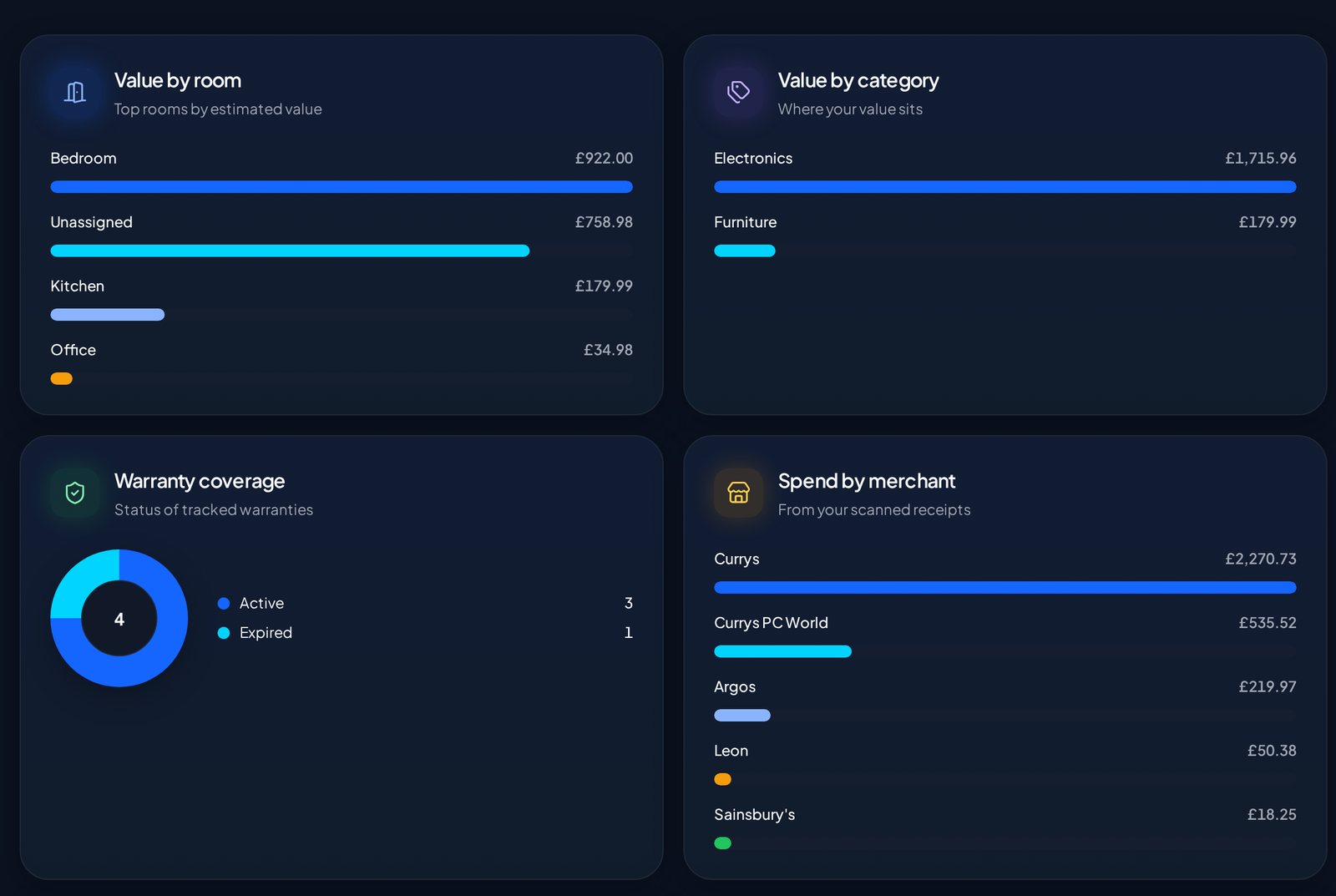
Vekrin is built around this idea. Records belong to your home rather than to a folder tree: a possession carries its own photographs, receipts, warranty and documents, and bills and household paperwork sit alongside them.
Scanned receipts are read automatically, so the shop, date and total are filled in for you and you confirm rather than type. Warranty dates can raise a reminder before they lapse, and the assistant can answer questions about your own records when you'd rather not go hunting.
- Documents, receipts and photographs attached to the item or bill they relate to
- Shared with the rest of the household, so it isn't one person's filing system
- An Insurance Inventory export when you need a single organised record on paper
Common questions
- Is a scan as good as the original document?
- For most everyday purposes a clear scan is accepted, and retailers routinely accept a photograph of a receipt. Certificates that prove legal status — passports, deeds, wills — should be kept in original form, with a scan as a backup rather than a replacement.
- How should I name files so I can find them later?
- Naming matters far less if documents are attached to the thing they describe. If you are working with plain files, date first in ISO order (2026-03-14), then what it is, then who it's from.
- What paperwork should I deal with as it arrives?
- Anything that proves ownership, cover or a payment obligation. Two minutes when it lands beats an afternoon of archaeology later.
- Where should important documents be stored?
- Originals somewhere dry, secure and known to more than one person in the household. Copies somewhere that survives the house — an encrypted cloud service or an app that keeps records off your device.
Related reading
Put your household paperwork somewhere it can be found
Create a home in Vekrin, add the records you'd hate to lose, and keep them attached to what they actually relate to.